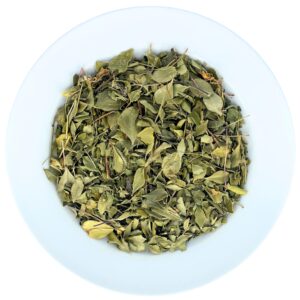
Kenya Purple Green Tea 100g
R255,00
Purple tea, like all other tea originates from the Camellia Sinensis plant. The story was told, that the tea sedlings were gifted by the Indian tea growers back in the early 1900's. Purple tea is mainly marketed by Kenya-based tea growers. It's grown at elevations between 1,200 and 2,300 metres above seal evel. This high altitude near the equator results in higher levels of UV exposure, and causes the plants to produce very high levels of anti-oxidants to protect the leaves from UV damage.
The purple appearance of the tea is caused by an unique genetic mutation that produces anthocyanin, the same powerful anti-oxidant found in blueberries and other blue-appearance vegetables. Anthocyanin has many medicinal properties and is particularly known to be beneficial against cardiovascular diseases. These antioxidants are known to provide anti-cancer benefits, improve vision, and aid in cholesterol, blood sugar metabolism and body mass reduction. At the same time, caffeine content is lower than that of black or green tea. Although it is named purple, due to the low oxidation level and limited whithering, roasting and drying processes, it is categorised within green tea, hence temperature for this tea should be around 75-80 degrees celsius. Grassy and nutty notes, with a delightful light purple radiance.